Comprehensive Guide to Angling & Fly Fishing Books

Overview
Angling books are a distinguished collecting niche that blend literature, natural history, and sport. This collecting area encompasses a rich history that traces back to the 15th century, featuring treatises on fishing techniques, the evolution of fly fishing, and influential literature from renowned authors. As a unique intersection of recreational practice and literary achievement, angling literature has fascinated readers and enthusiasts alike.
The collecting field ranges from the seminal work of Dame Juliana Berners to modern limited editions, showcasing a variety of styles, techniques, and ecological insights. Each piece not only tells a story of fishing but also reflects the cultural significance of this sport in different eras.
Early angling literature laid the foundation for modern practices. In 1496, Dame Juliana Berners, a prioress of the Benedictine Sopwell Nunnery, authored the "Treatyse of Fysshynge wyth an Angle," the earliest known English essay on recreational fishing. This work provided detailed information on fishing waters, rod and line construction, and the use of natural baits and artificial flies. It also addressed conservation and angler etiquette, highlighting the sport's cultural importance.
The 17th century saw the publication of Izaak Walton's "The Compleat Angler" in 1653, a seminal work that celebrated the art and spirit of fishing through prose and verse. Walton's work, which continued to evolve over the next quarter-century, remains a cornerstone of angling literature.
The 19th century introduced significant contributions to angling literature. Alfred Ronalds' "The Fly-fisher's Entomology" (1836) was the first comprehensive work related to the entomology associated with fly fishing, setting a standard for subsequent discussions and illustrations of aquatic fly hatches.
In the United States, the 1860s marked a pivotal period for angling literature. Thaddeus Norris' "The American Angler's Book" (1864) provided encyclopedic coverage of fishing practices in North America, including tackle, techniques, target species, and prime fishing locations. It is credited as the first significant American work to cover aspects of fly fishing.
Throughout the 20th and 21st centuries, numerous authors have enriched angling literature. Brian Clarke, a British author and angler, wrote extensively on fly fishing, including "The Pursuit of Stillwater Trout" (1975) and "The Trout and the Fly" (1980). His novel "The Stream" (2000) was described as "the most significant book of its kind that I have read since Rachel Carson's Silent Spring."
Collecting angling books offers enthusiasts a window into the evolution of fishing techniques, ecological understanding, and the cultural significance of the sport across different eras. Each volume serves as a testament to the enduring passion and dedication of anglers throughout history.

Historical Context
The earliest works centering around angling can be traced back to the 15th century. Dame Juliana Berners’ "The Treatyse of Fysshynge wyth an Angle" (1496) is noteworthy as the first book on angling printed in English, and it paved the way for subsequent literature. The mid-17th century introduced iconic texts like Izaak Walton's "The Compleat Angler" (1653), which remains foundational for collectors.
Understanding the various eras of angling literature gives the collector a framework for exploration:
- Early works (1496-1650) focus on fundamental angling techniques and early European influences.
- The Walton Era (1653-1800) includes pivotal contributions by Izaak Walton and Charles Cotton, defining the culture of angling.
- The Golden Age (1800-1900) sees a proliferation of fly fishing literature emphasizing a scientific understanding of aquatic insects.
- The Modern Era (1900-present) features deluxe editions and a surge of American authors contributing to the genre.

Key Authors & Works
| Author | Key Collectible Works (with years) | Estimated Value Range (First Edition) | Points of Issue / Notes |
|---|---|---|---|
| Dame Juliana Berners | The Treatyse of Fysshynge wyth an Angle (1496) | £50,000-£150,000+ (depending on condition and completeness) | Printed by Wynkyn de Worde; only a handful of copies known to exist; the foundational text of angling literature |
| Izaak Walton | The Compleat Angler (1653, 1655, 1661, 1668, 1676 editions) | £5,000-£45,000+ (first edition in original binding can exceed £45,000) | First edition has "contention" on title page (not "contentment"); five "lifetime" editions published during Walton's life; 5th edition (1676) includes Charles Cotton's Part II on fly fishing |
| Charles Cotton | The Compleat Angler Part II (1676, bound with Walton's 5th edition) | £3,000-£15,000 (as part of complete 5th edition) | Cotton's section focuses specifically on fly fishing; his Derbyshire stream, the Dove, became famous; later separately printed editions also collected |
| Alfred Ronalds | The Fly-Fisher's Entomology (1836) | £1,500-£6,000 | First edition has hand-coloured plates of flies; introduced scientific approach matching hatch; later editions less valuable |
| William Blacker | The Art of Angling (1842) | £2,000-£10,000 (with original flies) | Deluxe copies included actual flies tied by the author; surviving with intact flies are extremely rare and command premiums |
| William Scrope | Days and Nights of Salmon Fishing (1843) | £800-£3,000 | Pioneering work on Atlantic salmon; Scrope documented salmon lifecycle and praised soft hackles; first edition in original cloth |
| Theodore Gordon | Various articles and letters (collected posthumously) | £500-£2,500 (for early editions of collected works) | "The Father of American Fly Fishing"; original manuscripts and letters held at Princeton's Kienbusch Collection; first printings of his magazine articles highly collectible |
| Preston Jennings | A Book of Trout Flies (1935) | £400-£1,500 | Deluxe editions produced; important American work on fly patterns; first edition in dust jacket is scarce |
| Charles Phair | Atlantic Salmon Fishing (1937) | £300-£1,200 | Limited edition; comprehensive American work on salmon fishing; first editions with dust jackets command premium |
Click author names or titles to search on AbeBooks.
Identifying Valuable Editions
To identify valuable editions in angling literature, consider the following key factors:
First Edition Points for The Compleat Angler- The first edition (1653) prominently features the word "contention" in contrast to "contentment" on the title page.
- Later issues correct this but still maintain high value.
- Original bindings, such as sheep or calf, should be retained as later rebinding diminishes value.
- Complete copies must have all pages intact, including the dedication, index, and plates.
- Look for early imprints by Wynkyn de Worde, and Richard Marriot, Walton's publisher.
- Pay attention to Victorian publishers like Longman and John Van Voorst.
- Private presses like Nonesuch Press (1929 edition) and Derrydale Press are significant for collectors.
- Books must retain their original bindings to preserve value.
- Dust jackets for 20th-century limited editions add significant value.
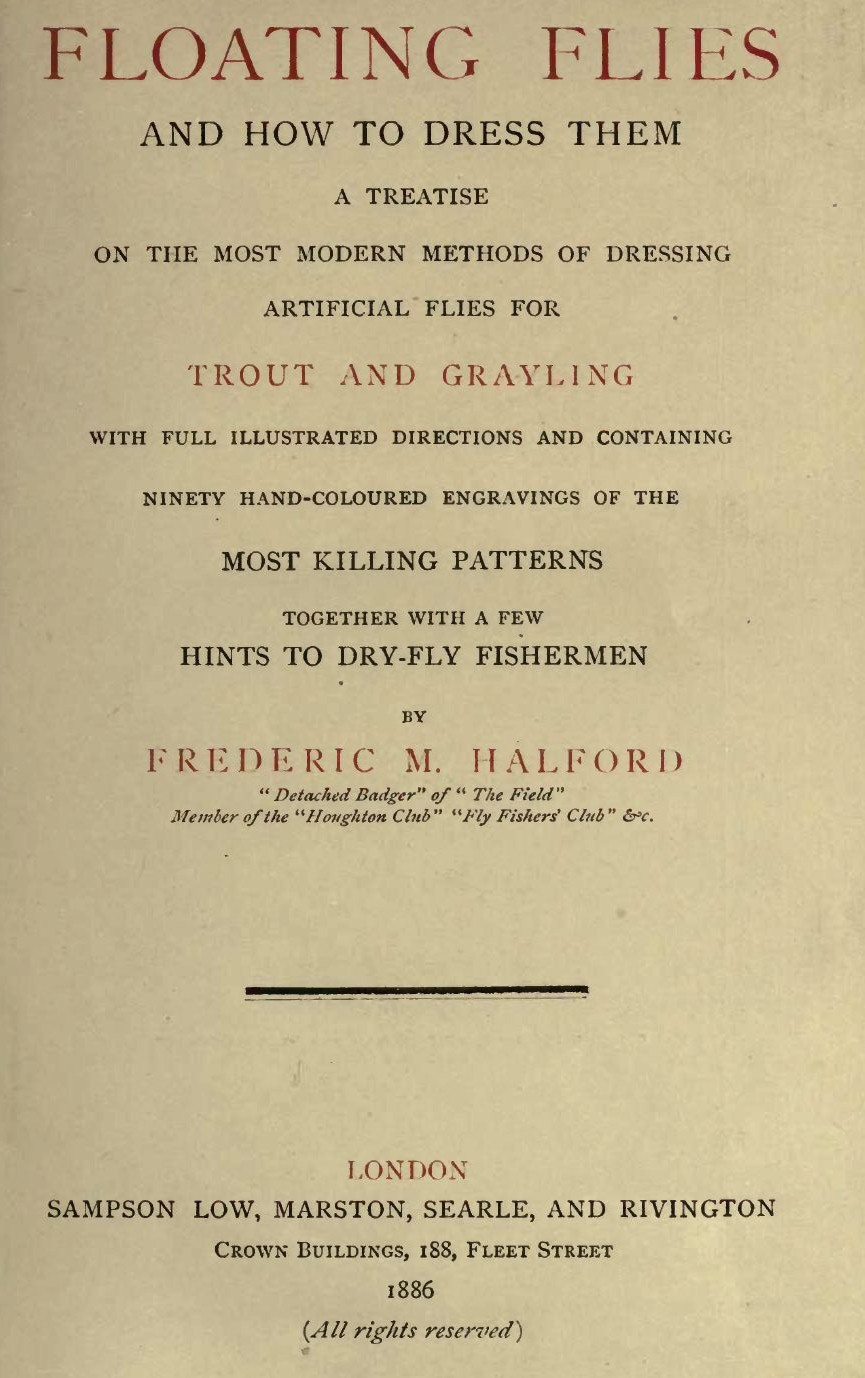
- During evaluation, verify the authenticity of inserted flies in works by Blacker, Aldam, and Halford.
- Unopened or unread copies, like the Nonesuch Press edition, command higher premiums.
- First American editions of significant British classics can be as valuable as their British counterparts.
- Early American angling literature includes texts like "History of the Schuykill Club" (1830) and William Shriner's "Sporting Manual" (1841).
Market Trends
The market for angling books continues to flourish, particularly for Walton first editions. Recent events, such as the gifting of the Charles Thacher Collection to the American Museum of Fly Fishing (2021), demonstrate sustained institutional interest and value in the collection.
Derrydale Press titles, known for their limited runs of 250 to 1,250 copies, have experienced steady appreciation, marking them as solid investments. Additionally, volumes with original flies, particularly those by Blacker, Halford, and Aldam, exhibit high demand among collectors.
The previous years have seen a burgeoning interest in 20th-century American angling literature, highlighting its emerging collector's market. Recent auction results from esteemed houses such as Sotheby's, Christie's, and Bonhams indicate significant value for prime angling literature, and collectors are encouraged to follow trends closely.

Glossary
The Compleat Angler — Izaak Walton's masterwork (1653), the most famous and collected angling book in English literature.
Treatyse of Fysshynge — The first English book on angling (1496), printed by Wynkyn de Worde as part of The Book of St. Albans.
Fly leaf — Blank pages at beginning or end of a book; often contain provenance inscriptions.
Point of Issue — Specific printing marks or states that identify a notable edition.
State — A term for an impression that differs from the first printed version of a particular work.
Impression — Refers to each time a book is printed from the same setting of type.
Deluxe Edition — A specially produced version of a book, often with additional features such as illustrations or leather binding.
Limited Edition — Books produced in restricted quantities, which increases their appeal and value.
Number Line — A numbering system that shows which edition or impression of the book is being sold.
Publisher's Binding — Binding style recognized by the publisher's standards, typically in a way that maintains high production quality.
Dust Jacket — A detachable outer cover that protects the book; first editions with dust jackets are often more valuable.
Provenance — The history of ownership of a book, which can significantly affect its value.
Bibliophile — A person who collects or has a great love of books.
Angling — The act of fishing with a rod and line; covered in depth within literature.
Piscatorial — Relating to fish and fishing, particularly used in literary contexts.
Ichthyology — The branch of zoology that studies fish, relevant in scientific aspects of angling literature.

Further Reading
Angling Books: A Collector's Guide by Keith Harwood — An essential modern reference, limited to 250 signed copies.
The Kienbusch Angling Collection — Princeton University finding aid online.
The Charles Thacher Collection — American Museum of Fly Fishing online catalogue.
The Flyfisher's Classic Library — A reprint series of important angling texts.
Coch-y-Bonddu Books — A leading dealer in angling books (catalogues available).
Thomas Turner Fishing Antiques — A dealer specializing in angling literature and collectibles.
Track Your Collection
Start cataloguing your collection in Biblion today and monitor values as the market evolves.